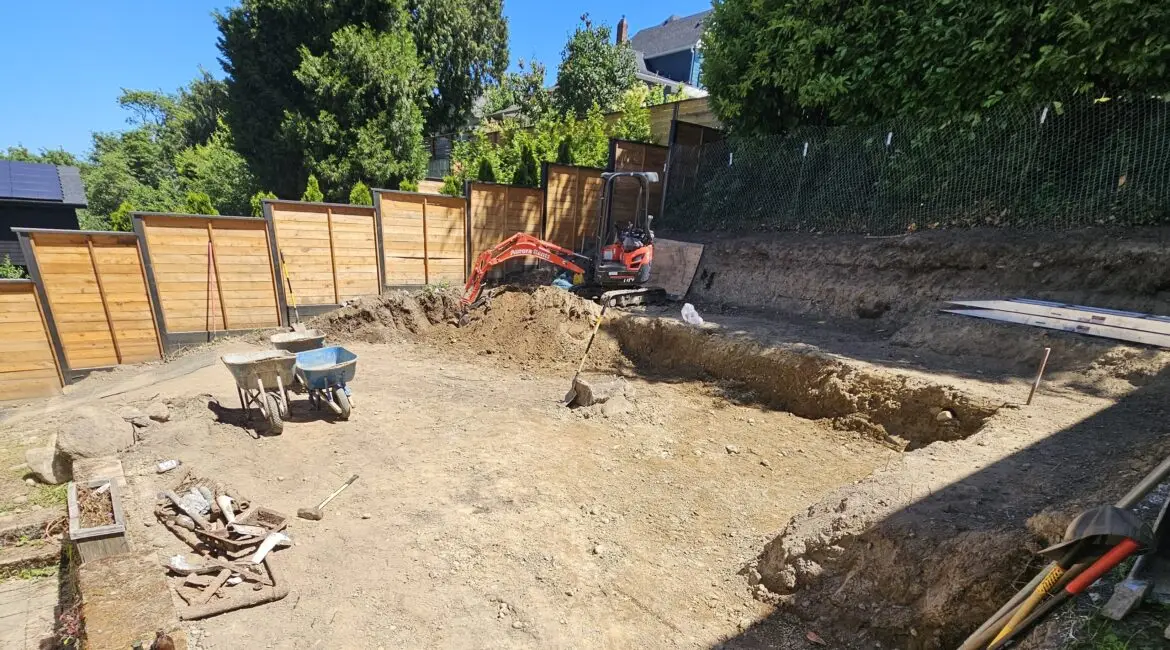
When homeowners think about landscape projects, they often focus on patios, plants, retaining walls, or outdoor living spaces. However, one of the most important elements of any successful landscape is something many people never see: grading. In Seattle, where rainfall, slopes, and drainage challenges are common, proper grading can determine whether a landscape performs beautifully for decades or develops expensive problems within a few years.
Simply put, grading is the shaping and contouring of the land to control how water moves across a property. Because Seattle receives significant rainfall throughout much of the year, even small grading mistakes can lead to major issues.
Seattle’s Rainfall Makes Grading Essential
Seattle’s climate places unique demands on residential landscapes. During the fall and winter months, soils can remain saturated for extended periods. If water cannot properly drain away from structures, patios, and lawns, it often collects in low areas.
Standing water can damage turf, create muddy conditions, stress plant roots, and contribute to erosion. In severe cases, improper grades can direct water toward foundations, crawl spaces, and basements, leading to costly repairs.
For many Seattle properties, especially those with slopes or older drainage systems, good water management is one of the most important investments a homeowner can make.
Grading Affects Every Part of Your Landscape
Many common landscape problems can be traced back to grading issues. Soggy lawns, standing water, moss growth, and muddy side yards often occur because water has nowhere to go.
Patios and walkways also depend on proper grading. Even a beautifully constructed patio can become unusable if water collects on the surface. Similarly, retaining walls require carefully planned grading to reduce pressure behind the wall and ensure long-term stability.
Proper grading helps every landscape element perform better, from lawns and planting beds to hardscapes and drainage systems.
Small Elevation Changes Make a Big Difference
Many homeowners assume grade changes require major excavation. In reality, even small changes in elevation can dramatically improve drainage and usability.
Adjusting a slope by just a few inches can redirect water away from a home, eliminate muddy areas, or improve lawn health. Swales, berms, and gentle contours often provide effective solutions without significantly altering the appearance of the yard.
Because Seattle lots frequently contain subtle slopes, these small adjustments can have a substantial impact.
Grading Should Come Before Other Improvements
One of the most common mistakes homeowners make is installing patios, sod, or planting beds before addressing drainage and grading concerns. Unfortunately, this often leads to costly repairs or reconstruction later.
A successful landscape project begins with understanding how water moves across the property. Once grading is properly established, hardscapes, lawns, and plantings can be installed with confidence.
Protect Your Investment
Professional grading not only improves the appearance of a landscape but also protects your home and outdoor investment. It helps prevent erosion, reduces standing water, improves drainage, and creates healthier growing conditions for plants.
For Seattle homeowners, grading is far more than a construction detail. It is the foundation of a successful landscape. Whether you’re planning a new patio, solving drainage issues, or redesigning your yard, proper grading ensures your landscape remains functional, attractive, and resilient through the Pacific Northwest’s wet climate for years to come.