

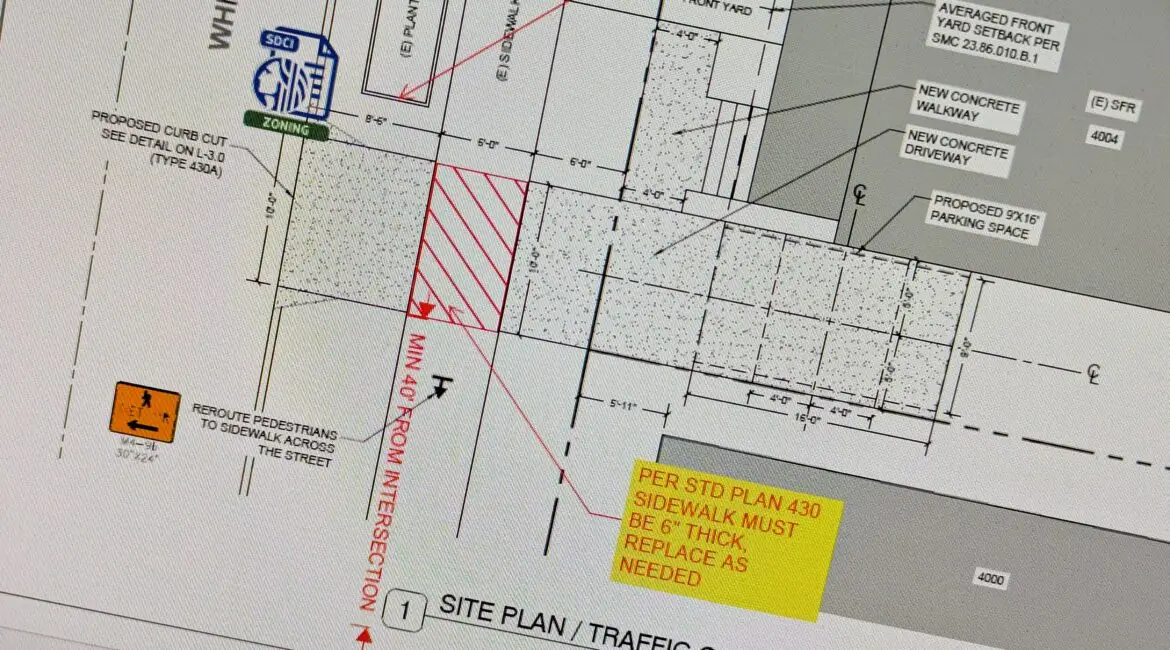
Whether you’re planning a new home, multifamily development, or commercial property, successful projects begin with thoughtful site planning. In the Seattle area, landscape design involves much more than selecting plants or laying out walkways. Local regulations often require detailed plans that address grading, drainage, stormwater management, street trees, and environmental compliance before permits can be approved.
Licensed landscape architecture brings these elements together into a coordinated, buildable design. For builders, developers, architects, and homeowners, working with a licensed landscape architect helps keep projects permit-ready while reducing delays during the review process.
What Is a Licensed Landscape Architect?
A licensed landscape architect has completed extensive education, professional training, and state licensing requirements. They are qualified to prepare and stamp landscape plans for permit submission, demonstrating that the plans meet professional standards and applicable regulations.
Stamped plans also provide reviewing agencies with confidence that the project has been designed with both code compliance and long-term performance in mind. As a result, many projects move through the permitting process with fewer revisions and less back-and-forth between reviewers and the design team.
Creating Permit-Ready Landscape Plans
Permit-ready landscape plans include much more than planting layouts. Depending on the project, they may incorporate site planning, grading, drainage, hardscape design, irrigation, planting schedules, and construction details.
In Seattle and surrounding communities, landscape plans must also address local development standards. Coordinating these requirements early helps identify potential challenges before construction begins, reducing costly design changes later in the project.
This level of planning is especially valuable for multifamily developments, commercial properties, and residential sites with complicated topography.
Green Factor and Environmentally Critical Areas
Many Seattle projects must comply with Green Factor requirements, which encourage sustainable landscape design through tree canopy, permeable paving, diverse planting, and other environmental features.
A licensed landscape architect can develop strategies that satisfy these requirements while supporting the overall design goals of the project. Green roofs, rain gardens, native plantings, and permeable paving systems often contribute to both compliance and long-term site performance.
Projects located within environmentally critical areas require even greater attention. Wetlands, steep slopes, streams, and habitat protection areas often involve additional regulations that affect grading, drainage, planting, and construction methods. Careful planning helps protect sensitive resources while keeping projects on track.
Grading, Drainage, and Stormwater Planning
Proper grading forms the foundation of every successful landscape. It directs water away from buildings, creates usable outdoor spaces, and supports healthy planting areas. Poor grading can lead to erosion, standing water, drainage failures, and expensive repairs.
Stormwater management should also be integrated early in the design process. Coordinating drainage systems, permeable surfaces, and water-quality facilities from the beginning improves project performance while helping satisfy local permitting requirements.
Street trees are another important consideration. Species selection, spacing, visibility, and root protection must all meet municipal standards while supporting long-term public safety and neighborhood character.
A Coordinated Approach to Successful Projects
Landscape architecture is most effective when it becomes part of the project early. Collaboration between the landscape architect, architect, civil engineer, builder, and owner helps identify challenges before construction begins.
Whether the project involves a custom home, multifamily development, or a site with steep slopes and environmental constraints, early coordination reduces redesign, supports permit approvals, and creates a landscape that is both functional and attractive.
For Seattle projects, licensed landscape architecture provides far more than beautiful planting plans. It delivers coordinated site design that balances aesthetics, engineering, environmental stewardship, and regulatory compliance. The result is a smoother permitting process, a more efficient construction schedule, and an outdoor environment designed to perform for decades.